Why is InMerch invite-only?
The toolkit is built for professional sellers and agencies. Reviewing every request keeps the community focused and the tools out of the wrong hands.
How long does approval take?
Most requests are reviewed quickly. Your status page updates automatically, and you'll be taken to the dashboard as soon as you're approved.
Does InMerch store the data I analyse?
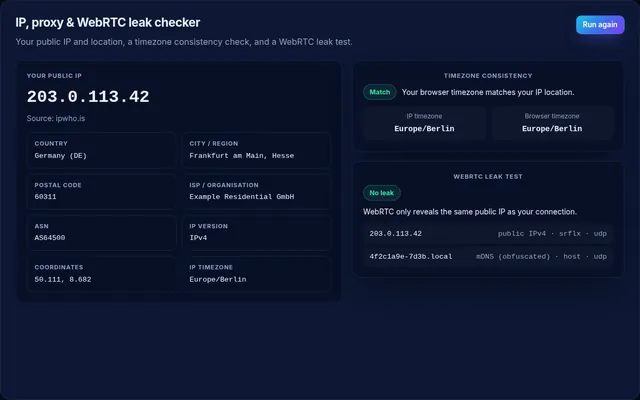
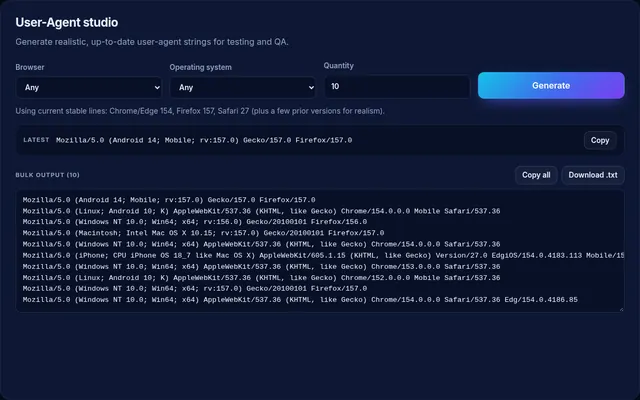
No. Fingerprint scans, user-agent, address, birthday and tax-number generation, and proxy formatting run entirely in your browser, and the IP check queries public geolocation services directly from your browser. Proxy checks run on InMerch servers only for the duration of the check; lists and results are not stored.
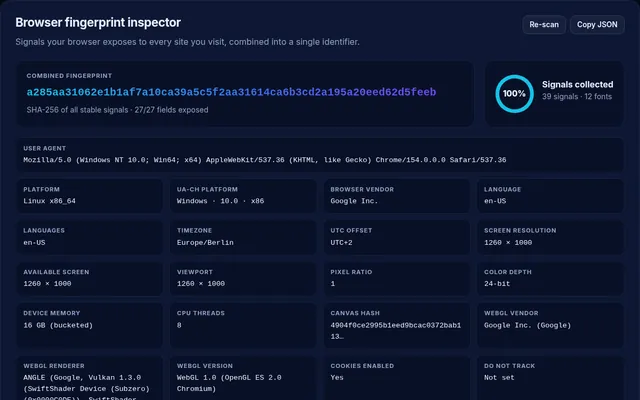
What is a browser fingerprint?
It's the combination of signals — screen, fonts, graphics hardware, timezone, language and more — that lets a site recognise a browser even without cookies.
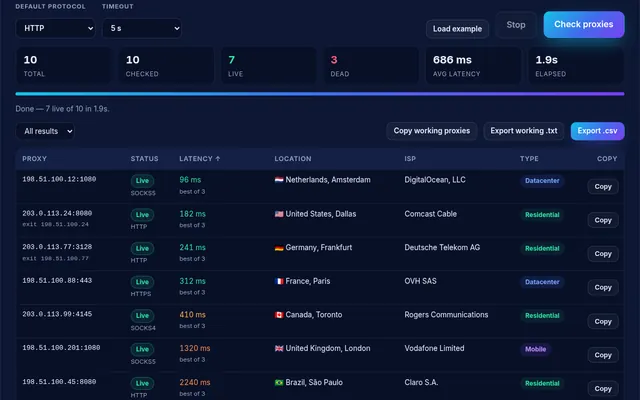
Which proxy formats are supported?
HTTP, HTTPS, SOCKS4 and SOCKS5 in host:port, host:port:user:pass, user:pass@host:port and URL notation — for both live checking and conversion to JSON, CSV or custom templates.
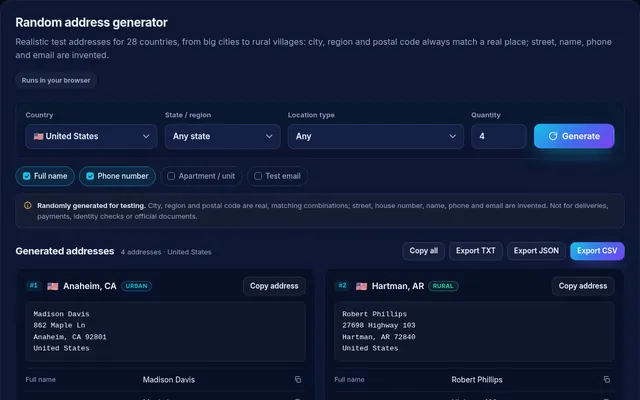
Are the generated addresses real?
Partly, by design. City, region and postal code are real, matching combinations taken from GeoNames (CC BY 4.0) and the U.S. Census ZCTA Gazetteer; street, house number, name, phone and email are randomly generated. They're meant for testing forms, checkouts and data pipelines, not for deliveries, payments or identity verification.
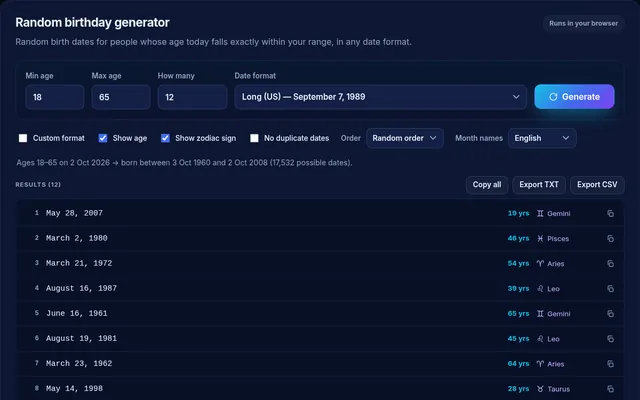
How does the birthday generator decide someone's age?
Age is counted in completed years on today's date in your browser, so every generated date belongs to someone who is between your minimum and maximum age right now. Someone born on 29 February turns a year older on 1 March in non-leap years.
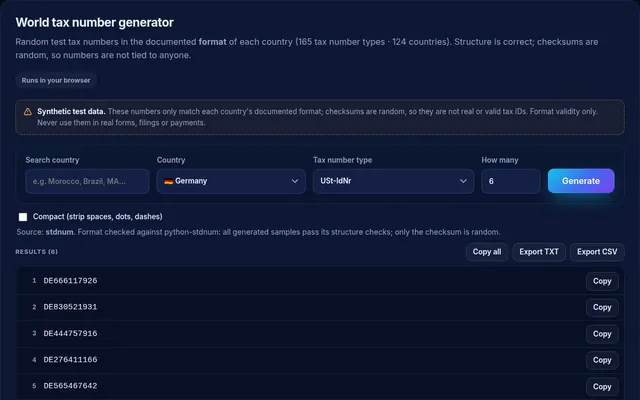
Are the generated tax numbers real?
No. They are synthetic test data. Each number follows the documented format of its country and type (length, letters, separators and fixed prefixes), but the check digits are random, so the numbers are valid in format only, not real or valid tax IDs. The built-in checker tests format only, and a random number can still match a real one by chance, so never use them in real forms, filings or payments.